

 28 May 2026
The Ultimate Guide to the Makhana Plant (Fox Nut): Cultivation, Processing, and Global Export
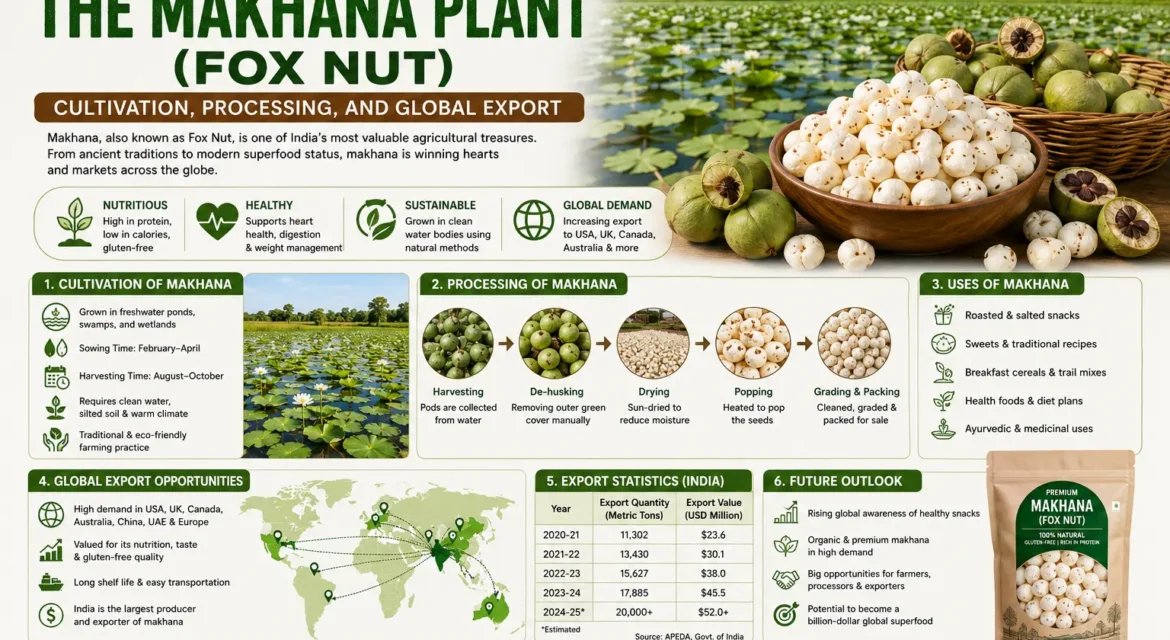
If you’re stepping into the booming global market for healthy snacks, you’ve likely encountered makhana (often branded internationally as fox nuts or lotus seeds). But a massive knowledge gap exists between the puffed white snack on supermarket shelves and the grueling, highly specialized agricultural process required to produce it.
This guide bridges that gap. We will break down exactly what the makhana plant is, how it’s cultivated in the wetlands of India, the intense labor behind its processing, and the strict grading standards required for international B2B agricultural trade.
Table of Contents
- Quick Answer: The Makhana Plant Explained
- 1. Botany: Understanding Euryale ferox
- 2. Geography: Where Does Makhana Come From?
- 3. How to Grow Makhana: The Cultivation Process
- 4. Makhana Processing: From Black Seed to White Puff
- 5. Commercial Export & B2B Grading Standards
- 6. Why Makhana Matters in 2026
- Frequently Asked Questions (FAQ)
Quick Answer: The Makhana Plant Explained
For quick reference, here are the direct answers regarding the botanical and commercial entity of makhana:
- Makhana Meaning & Origin: “Makhana” refers to the popped edible seeds of the prickly water lily.
- Makhana Made From Which Plant? It is produced from the seeds of Euryale ferox (the gorgon nut plant).
- Is it a Lotus Flower? No. Despite the common misnomer “lotus seeds,” makhana does not come from the standard lotus (Nelumbo nucifera).
- Where Does Makhana Come From? Over 90% of global makhana production occurs in India, specifically within the Mithilanchal region of Bihar.
- Makhana Plant in English: It is most commonly referred to as the Gorgon Nut or Fox Nut plant.
1. Botany: Understanding Euryale ferox
Before diving into commercial cultivation, we must understand the plant itself. The makhana plant is a perennial aquatic herb that thrives in stagnant, shallow water bodies (typically 3 to 6 feet deep).
The Phool Makhana Plant Structure
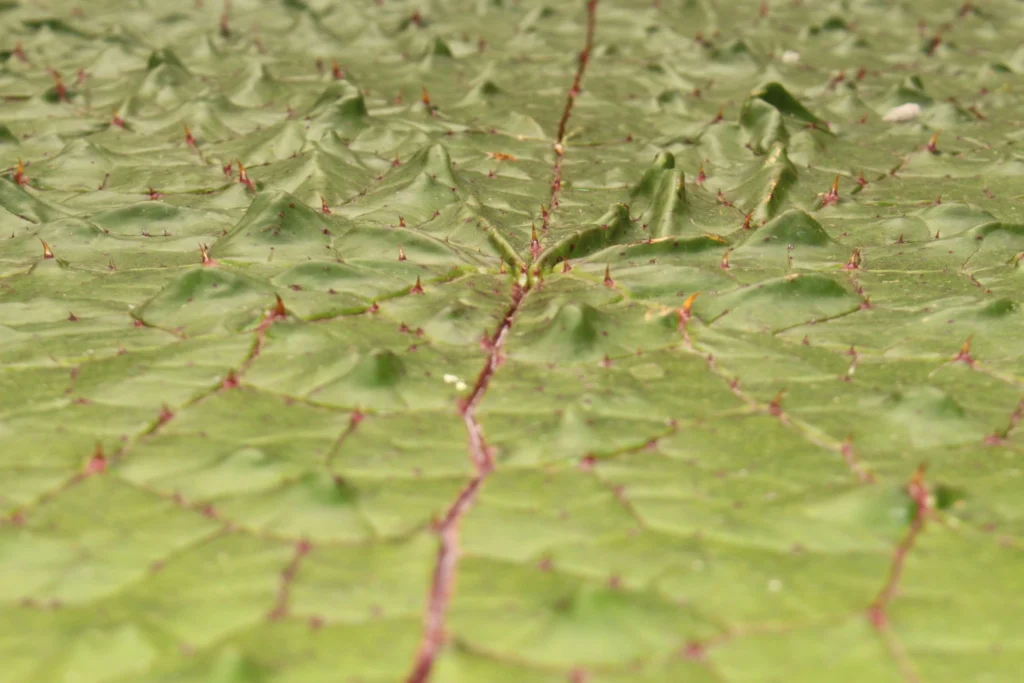
Unlike typical crops, the makhana plant is entirely aquatic and notoriously prickly.
- The Leaves: The plant features massive, round, floating leaves that can grow up to 1-2 meters in diameter. Both the top and bottom of the leaves are covered in sharp thorns, making cultivation and harvesting physically demanding.
- The Phool Makhana Flower: The makhana flower (fox nut flower) is bright purple or violet. It blooms briefly above the water surface before retreating underwater to develop its fruit.
- The Fruit: The makhana fruit plant produces a spongy, berry-like fruit roughly the size of a small orange. This fruit is heavily armored with spikes.
- The Seeds: Inside each fruit are 10 to 20 black, pea-sized seeds. These black seeds are what farmers harvest to eventually process into the white, puffy snack.
2. Geography: Where Does Makhana Come From?
If you want to source premium makhana for export, your compass points directly to India.
Makhana Production in India
Makhana farming in India is practically a monopoly. India accounts for roughly 90-95% of global production. Within India, the state of Bihar is the undisputed king of makhana, producing over 85% of the country’s total yield. The districts of Darbhanga, Madhubani, Purnia, and Katihar are the epicenters.
Why Bihar?
The Euryale ferox plant requires a very specific microclimate:
- High humidity and heavy rainfall.
- Stagnant water bodies (ponds, land depressions, and oxbow lakes known locally as chaurs).
- A specific soil composition rich in clay and organic matter.
While makhana cultivation is slowly expanding to other Indian states like West Bengal, Assam, and Odisha, the commercial and infrastructural hub remains firmly in Bihar.
Expert Insight for B2B Sourcing: “When negotiating export contracts for the UAE or Western markets, buyers don’t just ask for ‘makhana.’ They demand ‘Bihar-origin, GI-tagged makhana’ because the expansion rates and puff sizes from the Mithilanchal region remain botanically superior to seeds grown elsewhere.”
3. How to Grow Makhana: The Cultivation Process
Fox nut farming is largely organic by default. Because the plant grows in standing water alongside local aquatic life (like fish), the use of chemical pesticides and fertilizers is heavily restricted.
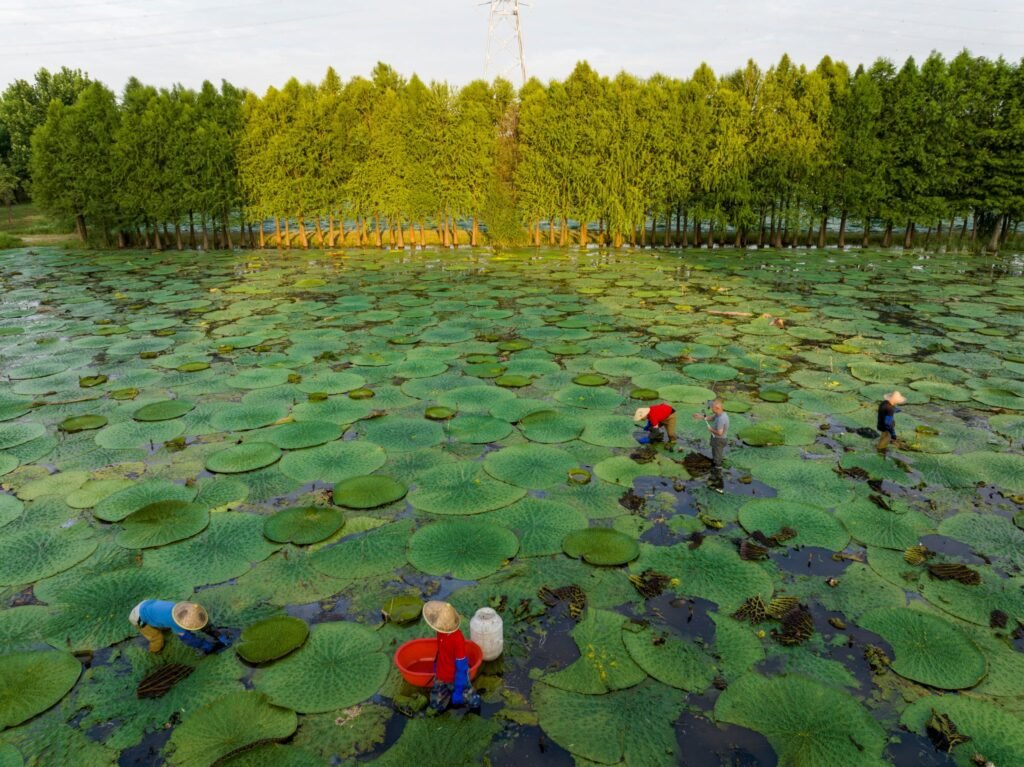
Here is the exact lifecycle of a makhana crop:
- Pond Preparation: November – December. Farmers clear the stagnant water bodies of weeds like water hyacinth. The seeds left over from the previous year’s harvest act as natural seedlings for the new crop. If starting fresh, farmers broadcast new seeds into the mud.
- Germination and Vegetative Growth: January – April. Seedlings emerge and float to the surface. By April, the massive, prickly leaves cover the entire surface of the pond, effectively blocking sunlight from reaching the bottom.
- Flowering and Fruiting: May – July. The bright purple phool makhana flowers bloom. After pollination, the flower dips back underwater where the spongy, thorny fruit develops.
- Fruit Maturation and Bursting: July – August. As the fruit matures underwater, its outer covering rots and bursts open. The black seeds (surrounded by a gelatinous aril) float to the surface for a few days before sinking down to the muddy floor of the pond.
- Manual Harvesting: August – October. This is the most grueling phase. Farmers dive or wade waist-deep into the muddy water, dragging specialized bamboo baskets along the bottom to scoop up the sunken black seeds. It is a highly skilled, labor-intensive process that resists modern mechanization.
4. Makhana Processing: From Black Seed to White Puff
The transition from a raw, black makhana seeds plant to the fluffy white snack is a marvel of traditional food processing. How makhana is produced involves intense thermal shock.
The 4-Step Popping Procedure
- Sun Drying and Cleaning: The tempered seeds are roasted a second time at very high temperatures (about 250 to 300 °C). Freshly picked seeds are rinsed to remove pond mud and then put on huge mats to dry in the sun. This reduces the moisture content from ~30% down to roughly 10%.
- Grading the Raw Seed: The raw black seeds are sifted through different sieves to categorize them by size. This ensures uniform heating later on.
- Tempering (Pre-roasting): The seeds are heated in cast-iron pans over an open fire. After this initial roasting, they are stored in ambient conditions for up to 3 days to loosen the tough outer black shell from the white kernel inside.
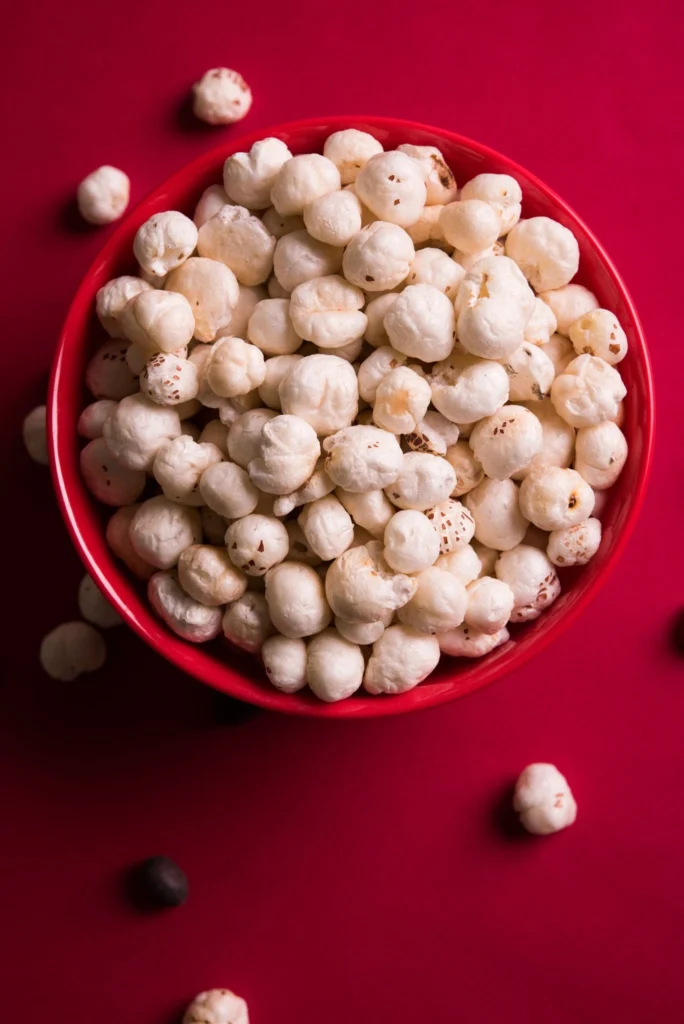
- Final Roasting and Popping: The seeds are roasted again at higher heat (around 250°C to 300°C). While still piping hot, the seeds are quickly scooped out and smashed with a wooden mallet. The sudden pressure break combined with the thermal shock causes the kernel to burst out of its black shell, popping into the white, fluffy “phool makhana” instantly.
5. Commercial Export & B2B Grading Standards
For global B2B trade, agro-commodity buyers demand strict standardization. Makhana is not sold as a single homogenous product; it is meticulously graded.
If you are structuring a global export pipeline—say, shipping containers of makhana alongside cumin seeds or other spices to the Middle East or North America—understanding visual grading is non-negotiable.
The Export Grading Matrix
International markets categorize makhana based on the diameter of the puff, its color (whiteness), and the absence of black seed-coat residue (known as “chhilka”).
| Grade Name | Puff Diameter (mm) | Visual Characteristics | Best Used For |
|---|---|---|---|
| Soota / Diamond | 20mm+ | Pure white, fully round, zero shell residue. | Premium retail packaging, gourmet snacks. |
| Phool / Hand Picked | 16mm – 19mm | Mostly white, highly consistent size. | Standard retail snacking, export bulk. |
| Thurra / Medium | 12mm – 15mm | Slightly irregular shapes, minor shell spots. | Flavored commercial snacks, trail mixes. |
| Silas / Chatti | Less than 12mm | Small, often halved or broken, off-white. | Powders, industrial food processing, medicinal. |
Export Documentation Note: To meet export market expectations, your visual grading charts and product catalogs must explicitly state the millimeter sizing (e.g., 16mm+ Phool Grade). Vague terms like “Large” or “Jumbo” fail to meet the rigorous customs and buyer expectations in markets like the UAE or EU.
6. Why Makhana Matters in 2026
For dietary brands, nutritionists, and commodity exporters, mapping makhana content across the consumer journey is critical.
- Top of Funnel (Awareness): Consumers searching “what is makhana” or “where does makhana come from.” Content here should focus on plant botany, vegan benefits, and gluten-free properties.
- Middle of Funnel (Consideration): Users searching “makhana processing” or “how makhana is produced.” Content should highlight the organic, labor-intensive nature of the crop to justify premium pricing.
- Bottom of Funnel (Conversion/Commercial): B2B buyers searching “makhana production in india” or “bulk fox nut export grades.” Content must demonstrate deep E-E-A-T, providing exact millimeter sizing, logistics, and supply chain transparency.
Frequently Asked Questions (FAQ)
Ready to Secure Premium Export-Grade Makhana?
Partner with a reliable supplier for GI-tagged, strictly graded Bihar Makhana. Ensure your supply chain meets international standards for UAE and global B2B markets.