
 03 July 2026
How to Launch a Flavored Makhana Brand in 2026
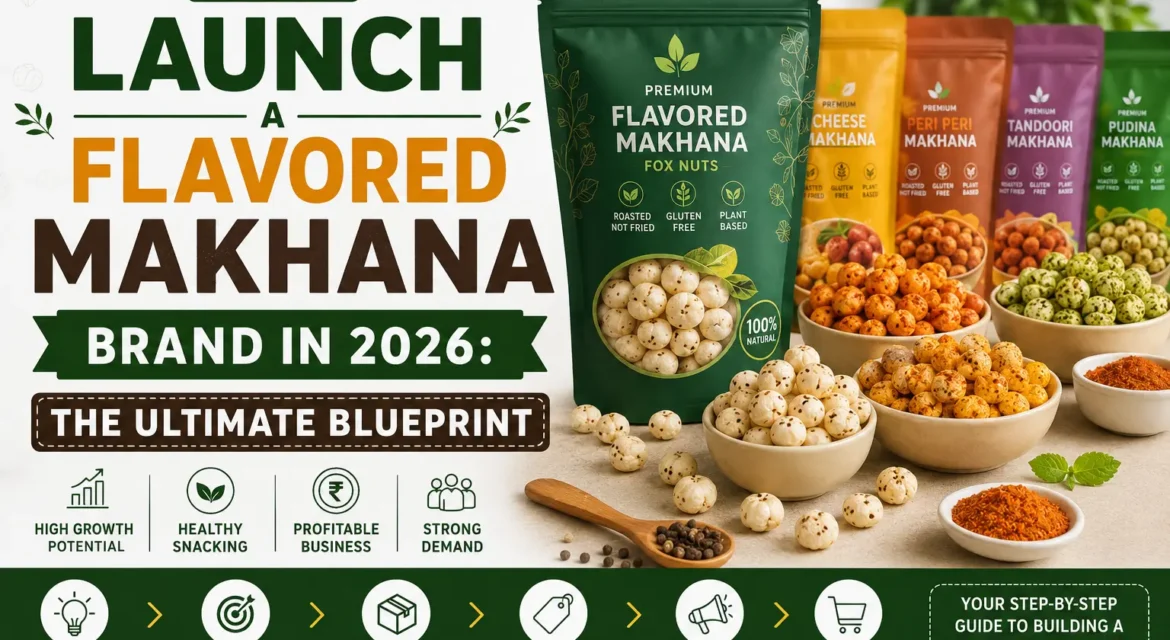
How to Launch a Flavored Makhana Brand in 2026: The Ultimate Blueprint
The snack section is changing dramatically. Consumers are aggressively ditching deep-fried, empty calories in favor of functional, guilt-free alternatives. Mention Makhana (fox nuts or lotus seeds).
When I consulted for a mid-sized D2C snack brand last year, they were struggling to break even with their legacy potato chip lines. We pivoted their portfolio to flavored makhana. Within eight months, their profit margins doubled. Why? Because flavored makhana commands a premium price tag while keeping raw material and processing costs relatively low.
Whether you want to build the next Too Yumm or Farmley, or you’re looking to capture a niche local market, launching a flavored makhana brand is one of the most lucrative food and beverage (F&B) opportunities today. Here is your comprehensive, step-by-step guide to doing it right.
Ready to Launch Your Flavored Makhana Brand?
Skip the sourcing headaches. Partner with Civize for bulk, premium-grade 5+ Suta Makhana. Ensure your first batch roasts perfectly and tastes incredible.
Table of Contents
- 1. The Market Opportunity: Why Makhana?
- 2. Choosing Your Business Model
- 3. Sourcing and The Supply Chain
- 4. The Manufacturing Process
- 5. Flavor Innovation & Product Development
- 6. Packaging & Branding
- 7. Financial Planning & Unit Economics
- 8. Licensing and Regulatory Compliance
- 9. Go-To-Market & Distribution Strategy
- Top FAQs for Makhana Entrepreneurs
1. The Market Opportunity: Why Makhana?
Before going into the mechanics, let’s look at the numbers. You aren’t just selling a snack; you’re selling a superfood.
- As of 2026, the global makhana market is valued at $1.8 billion and is projected to reach $4.2 billion by 2034, growing at a massive 9.8% CAGR. In India alone, the market sits at approximately $1.46 billion.
- The Hero Segment: While raw makhana is a staple, flavored makhana represents the fastest-growing sub-segment (growing over 12% year-over-year).
- The Geography: Geographically, around 90% of the world’s makhana is produced in Bihar, India. However, consumption is exploding in North America and Europe as a plant-based snacking alternative.
- The Consumer: Targeted at fitness enthusiasts, diabetics, and millennials experiencing “snacking guilt.”
2. Choosing Your Business Model
Don’t rush out to buy machinery just yet. The biggest mistake new founders make is trying to control the entire supply chain from day one. You have three primary paths:
A. The Private Label (D2C Brand) Route
- How it works: You hire a contract manufacturer (like Annakosha) to source, roast, flavor, and pack the makhana. You focus purely on branding, marketing, and distribution.
- Best for: Marketing-savvy founders, influencers, and low-capital startups.
- Startup Cost: ₹2 Lakhs – ₹5 Lakhs.
B. The Processing & Manufacturing Unit
- How it works: You buy raw makhana from wholesalers in Bihar, process it (sort, roast, flavor, pack) in your own facility, and sell it to retailers or under your own brand.
- Best for: Entrepreneurs with capital who want strict quality control and higher long-term margins.
- Startup Cost: ₹15 Lakhs – ₹35 Lakhs.
C. The B2B Wholesale Trader
- How it works: You buy bulk roasted/flavored makhana and supply it unbranded to supermarkets, caterers, or smaller brands.
- Best for: Networkers with strong B2B sales skills and access to large storage facilities.
3. Sourcing and The Supply Chain
If you decide to manufacture or trade, your sourcing strategy will make or break your margins. Makhana cultivation is highly concentrated in the wetlands of Bihar.
Quality Grading: Makhana is graded by size and color (e.g., 5-suta, 6-suta, 7-suta). Larger, whiter flakes (hand-picked) are premium and perfect for flavored snacks, whereas smaller, off-white flakes are often powdered for culinary use.
Expert Insight: “Never chase the absolute lowest price when sourcing raw makhana from Darbhanga or Purnia. The moisture content in cheap batches will destroy your roasting yield. Pay a 5% premium for properly sun-dried, sorted grades—it saves you 15% in processing waste.” – Rajiv K., Bulk Agri-Commodities Trader
4. The Manufacturing Process
If you are setting up your own processing unit, the manufacturing flow is critical. A single misstep in temperature control will result in a chewy, unpalatable snack.
- Sorting and Grading: Removes impurities and broken pieces. Raw makhana is manually or mechanically sorted over vibrating sieves to remove black seeds, stones, and broken pieces. Uniform size is critical for even roasting.
- Dry Roasting: Temperature control is vital. The graded makhana is fed into an automatic rotary roaster. It is roasted at controlled temperatures (usually around 150°C to 180°C) to remove residual moisture and achieve a crisp, crunchy texture.
- Oil Coating: The binder. The warm makhana is sprayed with a very fine mist of edible oil (olive, ghee, coconut, or refined sunflower). This acts as an adhesive for the dry seasonings.
- Seasoning and Flavoring: Uniform distribution. The coated makhana tumbles through a seasoning drum where natural spices (e.g., peri-peri, pudina, cheese, or truffle) are mixed uniformly.
- Cooling: Prevents sogginess. The hot, flavored makhana must be allowed to cool to room temperature on a conveyor. Packing it hot will cause condensation inside the pouch, ruining the crunch.
- Nitrogen Flushing and Packaging: The cooled makhana is immediately packed into moisture-barrier pouches and flushed with nitrogen to prevent rancidity and extend shelf life to 6-9 months.
Essential Machinery
To automate this, you will need an industrial setup. Commercial rotary roasters and flavoring drums ensure that the fragile fox nuts aren’t crushed during processing.
5. Flavor Innovation & Product Development
Flavor is your primary differentiator. The days of plain salt and pepper are over. You need a taste matrix that appeals to a variety of palates in order to stand out on a crowded supermarket shelf:
- The Safe Bets (Volume Drivers): Himalayan Pink Salt, Cream & Onion, and Classic Pudina (Mint) are the Safe Bets (Volume Drivers).
- The Trend Catchers (Gen Z appeal): Peri-Peri, Sriracha, Sweet Chilli, Jalapeno Cheese.
- The Premium Indulgences: White Chocolate Coated, Truffle Mushroom, Caramelized Jaggery.
Start with 3 to 4 flavors. Testing a “sweet” variant alongside savory ones is highly recommended to capture the dessert-craving demographic.
6. Packaging & Branding
Makhana is highly hygroscopic—meaning it absorbs moisture from the air rapidly. Your packaging isn’t just about aesthetics; it is a structural necessity.
- Material: Use multi-layered metallized laminated pouches (PET/MET PET/PE).
- Format: Stand-up zipper pouches are the gold standard because people rarely complete a whole pack in one sitting.
- Visual Identity: The packaging must clearly communicate “Guilt-Free,” “High Protein,” and “Gluten-Free”.
7. Financial Planning & Unit Economics
Understanding your costs is critical. While exact numbers fluctuate based on scale, here is a general breakdown of the unit economics for a 50g retail pouch of flavored makhana priced at ₹80:
| Cost Component | Approx. Cost per 50g (₹) | % of MRP |
|---|---|---|
| Raw Makhana & Oil | ₹18 – ₹22 | 25% |
| Spices & Flavoring | ₹3 – ₹5 | 5% |
| Packaging Material | ₹4 – ₹6 | 6% |
| Processing/Labor | ₹2 – ₹4 | 4% |
| Total Landed Cost | ₹27 – ₹37 | ~40% |
| Distributor/Retailer Margin | ₹20 – ₹28 | 30% |
| Gross Brand Profit | ₹15 – ₹23 | ~30% |
Note: Marketing, logistics, and overheads will be deducted from your Gross Brand Profit.
Calculate Your Startup Costs
Use this interactive tool to estimate your total capital requirements based on your chosen business model and scale:
8. Licensing and Regulatory Compliance
You cannot sell a food product without strict regulatory compliance. In India, you must secure:
- FSSAI License: Central or state license based on your manufacturing capacity.
- GST Registration: Mandatory for B2B sales and e-commerce listings.
- MSME / Udyam Registration: Highly recommended to avail of government subsidies on machinery.
- Nutritional Labelling: Lab testing is required to print accurate nutritional information, expiry dates, and batch codes on your packaging.
9. Go-To-Market & Distribution Strategy
A great product dies without distribution. You need an omnichannel approach:
- 1 Phase : Start your own Amazon store, Shopify store, and quick-commerce apps like Zepto or Blinkit. This gives you instant customer feedback on flavors.
- Phase 2: Modern Trade (6-12 months): Approach premium supermarkets (Nature’s Basket, Foodhall) and health-food stores.
- Phase 3: General Trade (Kirana Stores): This requires a robust distributor network and smaller SKU sizes (e.g., ₹20 or ₹30 packs) to encourage impulse buys.
Expert Advice: “The biggest obstacle to success in direct-to-consumer snacking is customer retention, notwithstanding the low entrance barrier. Facebook advertisements and attractive packaging are what drive your first purchase. The second purchase is driven purely by the crispness and flavor characteristics. ” – Sarah Jenkins, FMCG Growth Strategist
Top FAQs for Makhana Entrepreneurs
Ready to Launch Your Flavored Makhana Brand?
Skip the sourcing headaches. Partner with Civize for bulk, premium-grade 5+ Suta Makhana. Ensure your first batch roasts perfectly and tastes incredible.