
 12 September 2026
The Ultimate Guide to Partnering with a Makhana Distributor in the USA
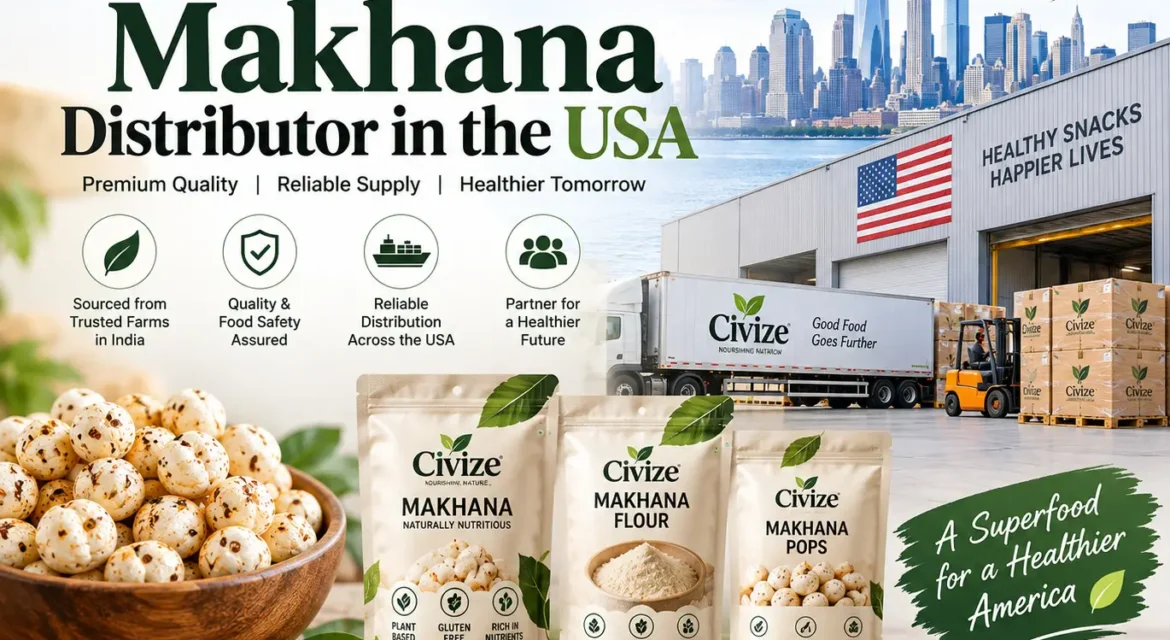
The demand for healthy, plant-based, and gluten-free snacks in North America has reached a tipping point, and makhana (fox nuts) is at the forefront of this revolution. If you are a grocery chain, natural food brand, or private label startup, finding a reliable makhana distributor in the USA is the single most critical step in successfully launching or scaling your product line.
A premium wholesale makhana supplier in the United States does more than just import raw goods; they bridge the gap between Indian aquaculture farmers and American retail shelves, ensuring FDA compliance, consistent grading, and transparent pricing. At Civize, we specialize in delivering export-grade fox nuts directly to US buyers, eliminating the friction of cross-border logistics.
Contact Our B2B Sales Team Today
Table of Contents
- Why the US Market is Booming for Makhana
- What to Look for in a Wholesale Makhana Supplier in the United States
- Understanding Foxnut Grades and Quality Standards
- Makhana Price in USA Per KG: A Complete Breakdown
- FDA Regulations, FSVP, and Import Compliance
- Private Labeling vs. Bulk Purchasing
- Why Civize is the Best Makhana Distributor in the USA
- Expert Insights & Future Snacking Trends
- Frequently Asked Questions (FAQs)
Why the US Market is Booming for Makhana
Makhana, scientifically known as Euryale ferox and commonly referred to as fox nuts or gorgon nuts, is an aquatic seed native to eastern Asia, predominantly cultivated in the Bihar region of India. Historically used in Ayurvedic medicine and traditional Indian cuisine, makhana has recently exploded in the Western hemisphere as a superfood snack.
The Shift to Better-for-You Snacking
The modern American consumer is actively seeking alternatives to heavily processed, corn-based, and potato-based snacks. Makhana perfectly aligns with current dietary trends:
- Allergen-Friendly: Naturally gluten-free, soy-free, and nut-free.
- Nutritional Profile: High in protein, low in the glycemic index, and rich in antioxidants, magnesium, and potassium.
- Versatility: Its neutral flavor profile makes it an excellent canvas for both savory (e.g., Himalayan pink salt, vegan white cheddar) and sweet (e.g., dark chocolate, caramel) seasonings.
“The shift towards plant-based, clean-label snacking has moved makhana from a niche ethnic product to a mainstream American snack aisle staple. Brands that capitalize on this early are seeing tremendous category growth.” — Food & Beverage Trade Analyst
The Role of a Fox Nut Distributor in the United States
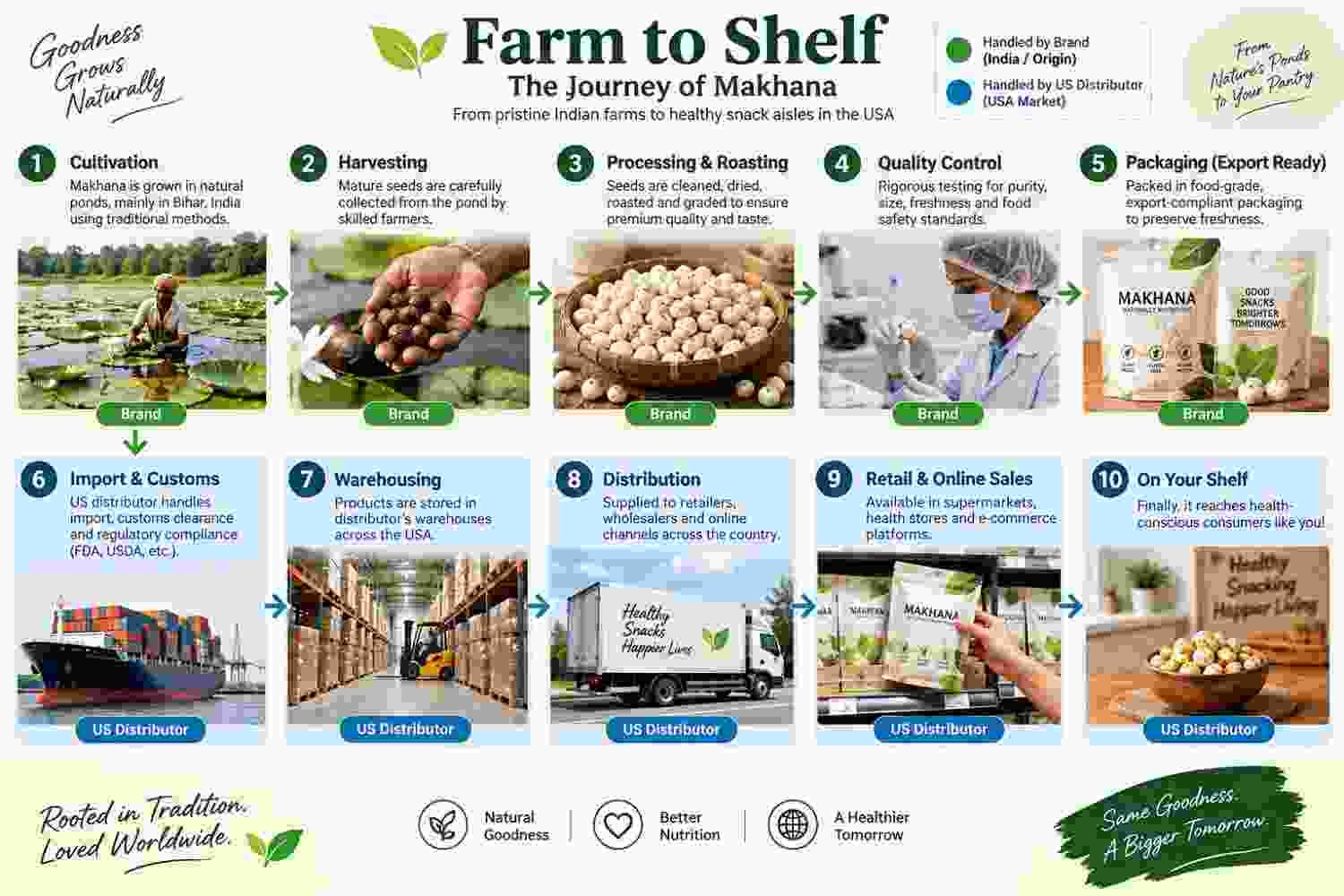
To support this growing retail demand, the B2B supply chain relies heavily on specialized makhana dealers in the USA. A distributor acts as the vital link that manages agricultural sourcing, quality control, international freight, and warehousing. Without a domestic distributor, brands are left to navigate the murky waters of international trade, quality inconsistencies, and unpredictable customs delays.
What to Look for in a Wholesale Makhana Supplier in the United States
Selecting the right foxnut supplier in the USA is a make-or-break decision for your consumer packaged goods (CPG) brand. Not all suppliers maintain the same standards of quality and ethical sourcing. When evaluating a potential makhana wholesaler in the USA, consider the following non-negotiable criteria.
1. Supply Chain Transparency
The best suppliers can trace their products directly back to the farms. Makhana harvesting is labor-intensive, often involving marginalized farming communities. A responsible distributor ensures fair trade practices and ethical labor standards, which is increasingly important to American consumers who value ESG (Environmental, Social, and Governance) initiatives.
2. Quality Assurance and Grading
Makhana is hand-graded based on size, color, and density. A reputable fox nut distributor in the United States will offer distinct grades (e.g., 5-Soot, 6-Soot) and guarantee a low percentage of broken or unpopped seeds.
3. Regulatory Expertise
Importing agricultural products into the US is heavily regulated. Your distributor must have a deep understanding of the US Food and Drug Administration (FDA) requirements, USDA standards, and customs clearance protocols.
4. Scalability and Warehousing
As your brand grows, your supplier must be able to keep up. Local warehousing in the USA prevents stockouts and reduces lead times from months to mere days. Look for makhana suppliers in the USA that maintain robust domestic inventory.
Understanding Foxnut Grades and Quality Standards
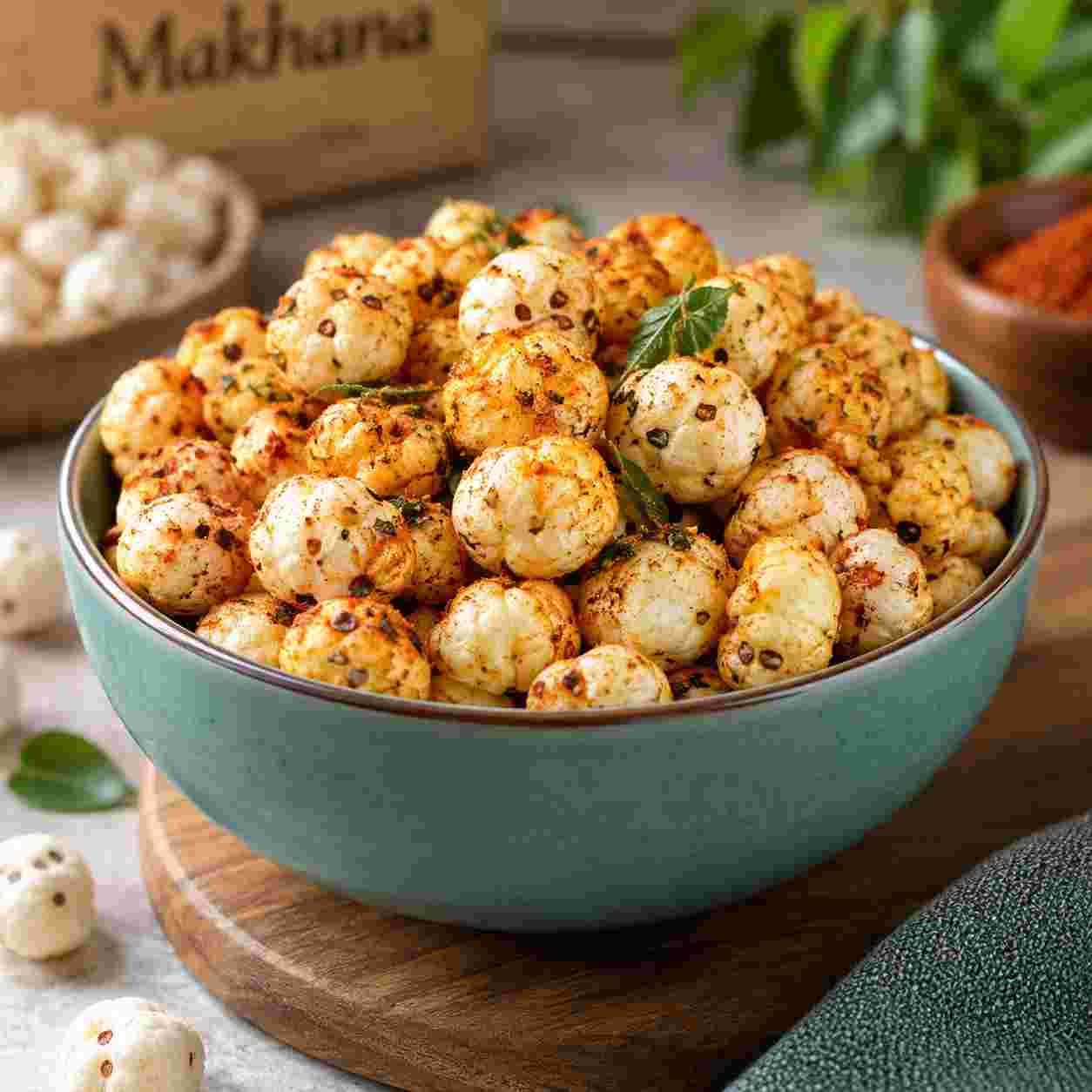
When you buy bulk makhana, you are not buying a uniform commodity. Makhana is sorted into different grades, which directly impacts the texture, visual appeal, and price of your final product. Understanding these grades is crucial when communicating with a wholesale fox nut supplier in the USA.
The Traditional “Soot” Sizing System
In the Indian wholesale market, makhana size is traditionally measured in “soot” (a localized unit of measurement where 1 soot equals roughly 3.175 mm). For the US market, this is often translated into millimeter (mm) sizing.
| Grade Level | Size (Diameter) | Best Use Case | Market Positioning |
|---|---|---|---|
| Premium (6-Soot+) | 18mm – 20mm+ | High-end retail snacking, premium private labels. | Gourmet, artisanal snacks. High price point. |
| Standard (5-Soot) | 15mm – 17mm | Standard flavored snack packs, trail mixes. | Mass-market grocery, standard consumer brands. |
| Medium (4-Soot) | 12mm – 14mm | Commercial roasting, ground makhana powder. | Value brands, ingredient use in protein bars. |
| Makhana Churi (Broken) | Mixed / Broken | Culinary use, baking, infant food formulas. | B2B ingredient sourcing, highly cost-effective. |
Quality Indicators to Inspect
When receiving a sample from your wholesale makhana supplier in the USA, inspect the following attributes:
- Color: Premium makhana should be bright white. Yellowing or brown spots indicate poor processing or old stock.
- Texture: It should be light, airy, and crunch easily. A chewy texture indicates moisture absorption and poor packaging.
- Defect Rate: The percentage of “dheela” (unpopped or hard seeds) should be strictly below 2% in export-grade batches.
“The biggest mistake new snack brands make is buying based on price alone. A cheaper, smaller grade of makhana requires more seasoning to mask its dense texture, ultimately hurting your margins and product quality.” — Supply Chain Director, Natural Foods
Makhana Price in USA Per KG: A Complete Breakdown
One of the most common queries we receive at Civize is regarding the makhana in usa price. The cost of wholesale makhana is highly dynamic, influenced by agricultural yields in India (usually harvested between August and October), international shipping rates, and currency exchange fluctuations.
Average Wholesale Pricing Matrix
While prices fluctuate, here is a general benchmark for the makhana price in usa per kg when purchasing commercial B2B quantities (Pallet or Container loads):
- Premium Grade (18mm+): $12.00 – $17.00 per kg
- Standard Grade (15mm-17mm): $9.50 – $13.00 per kg
- Commercial Grade (Under 14mm): $7.00 – $10.00 per kg
(Note: These prices reflect landed costs in the US, post-customs clearance. Prices for smaller, LTL (Less Than Truckload) orders will naturally carry a premium.)
Factors Influencing the Cost
- Harvest Yields: Floods or droughts in the Bihar region of India can severely impact global supply, driving prices up.
- Ocean Freight: Post-pandemic supply chain adjustments continue to affect shipping container costs from Indian ports (like Mundra or Nhava Sheva) to US ports (like Los Angeles or Newark).
- Tariffs and Duties: The US Customs and Border Protection (CBP) applies specific Harmonized System (HS) codes to agricultural imports, which carry associated duties.
- Processing Standard: Sun-dried vs. machine-roasted, and manual vs. optical machine sorting, all impact the final FOB (Free on Board) price.
Why Domestic Wholesale is Often Cheaper Than Direct Import
Many brands attempt to bypass a makhana distributor in the USA to buy directly from Indian brokers, thinking they will save money. However, hidden costs—such as customs holds, FDA inspection fees, container fumigation, and international wire transfer fees—often make direct importing more expensive and far riskier for small to mid-sized brands. A local distributor consolidates these costs through massive volume purchasing.
FDA Regulations, FSVP, and Import Compliance
Importing food into the United States is not a casual endeavor. The FDA strictly monitors agricultural imports to ensure public safety. If your fox nut distributor in the United States is not compliant, your entire supply chain is at risk of seizure at the port of entry.
The Foreign Supplier Verification Program (FSVP)
Under the FDA’s Food Safety Modernization Act (FSMA), the FSVP rule requires US importers to verify that their foreign suppliers are producing food in a manner that provides the same level of public health protection as required under US law.
At Civize, we handle full FSVP compliance. This means:
- We conduct comprehensive hazard analysis on the makhana supply chain.
- We audit our overseas facilities for Good Manufacturing Practices (GMP).
- We maintain up-to-date documentation that is readily available for FDA inspection.
Key Compliance Requirements for Makhana
- FDA Facility Registration: The processing facility in India MUST be registered with the US FDA.
- Prior Notice: Before a shipment arrives at a US port, a Prior Notice must be filed with the FDA, detailing the exact contents, origin, and destination of the food.
- Phytosanitary Certification: To prevent the introduction of foreign pests, agricultural products require a phytosanitary certificate issued by the government of the exporting country, verifying the shipment has been inspected and is pest-free.
- Allergen Labeling: While makhana is free from the top 9 major allergens, cross-contamination in processing facilities is a major FDA concern. Dedicated processing lines are critical.
“Missing FSVP documentation or incomplete hazard assessments can result in shipment detention or delayed entry. Having the right expertise behind your import program is non-negotiable for food brands.” — FDA Import Compliance Consultant
Private Labeling vs. Bulk Purchasing
When partnering with a wholesale makhana supplier in the United States, you typically have two main avenues for bringing your product to market: purchasing raw bulk makhana to roast and flavor yourself, or utilizing private label (white label) services.
Option A: Bulk Raw Purchasing
Best for: Brands with existing commercial kitchens, co-packing relationships, or proprietary seasoning blends.
- The Process: You purchase 10kg or 20kg moisture-sealed bags of raw, unroasted fox nuts. You control the roasting temperature, oil usage (e.g., avocado oil, olive oil), and flavoring.
- The Advantage: Complete control over the final product formulation and higher margins at scale.
Option B: Turnkey Private Labeling
Best for: Marketing-focused brands, influencers, or retailers looking for a fast go-to-market strategy without investing in manufacturing infrastructure.
- The Process: The distributor handles everything. The makhana is roasted, flavored, and packaged in your custom-branded bags before it even reaches your warehouse.
- The Advantage: Speed to market. You can launch a brand in 60-90 days with zero manufacturing overhead.
At Civize, we support both models, acting as a flexible best makhana distributor in the usa tailored to your specific operational needs.
Why Civize is the Best Makhana Distributor in the USA
The market is crowded with brokers, but true distributors are rare. Civize has established itself as the premier makhana distributor in the USA through a relentless commitment to quality, transparency, and B2B customer success.
1. Direct Farm-to-Warehouse Sourcing
We eliminate unnecessary middlemen. By partnering directly with farming cooperatives in India, we ensure that farmers receive fair compensation while securing the highest quality crop for our American buyers.
2. Uncompromising Quality Control
Our makhana undergoes a rigorous multi-stage sorting process:
- Manual Sorting: Removing visual defects and broken shells.
- Optical Sorting: Using laser technology to ensure uniform size and color.
- Moisture Control: Packed in heavy-duty, food-grade liners to maintain the critical moisture level (typically 8-10%) that prevents brittleness or spoilage during oceanic transit.
3. Deep US Inventory
Supply chain shocks are the enemy of retail brands. We maintain robust warehousing across the United States. When you partner with Civize as your wholesale makhana supplier in the usa, you benefit from domestic lead times. Need a pallet in New York or Los Angeles? We can dispatch it within 48 hours.
4. Expert B2B Support
We don’t just sell ingredients; we build partnerships. From assisting with packaging design concepts to advising on the best oil-to-seasoning ratios for roasting, our team provides consultative support to help your brand succeed.
Expert Insights & Future Snacking Trends
To build a sustainable brand, you must look ahead. Here is what industry analysts and our internal experts see for the future of makhana in the USA.
The Rise of Functional Snacking
Consumers no longer want snacks that merely taste good; they want functional benefits. We are seeing a surge in demand for makhana coated with functional ingredients like ashwagandha, turmeric, and adaptogenic mushrooms.
“The next iteration of the makhana trend in the US won’t just be about replacing popcorn. It will be about functional stacking—combining the inherent nutritional density of fox nuts with trending wellness ingredients to create hyper-functional super-snacks.” — Product Innovation Lead, Civize
Sustainability as a Selling Point
Makhana is a highly sustainable crop. It is grown in stagnant wetlands and ponds, requiring no synthetic fertilizers and minimal land disruption. Brands that highlight the ecological benefits of makhana aquaculture are capturing the attention of the eco-conscious Gen Z demographic.
Expansion into B2B Ingredients
Beyond whole roasted snacks, makhana dealers in the USA are seeing increased inquiries for makhana flour. As a gluten-free binder, makhana powder is beginning to appear in vegan baking mixes, protein bars, and plant-based meat alternatives.
Conclusion: Take the Next Step with Civize
The trajectory of the healthy snack market is clear, and makhana is positioned to be a dominant player in the coming decade. However, your success depends entirely on the strength, reliability, and compliance of your supply chain.
Navigating international sourcing, FDA regulations, and quality control is complex, but you don’t have to do it alone. By partnering with Civize, you are aligning with the most trusted makhana distributor in the USA. We provide the premium quality, stable pricing, and logistical expertise required to scale your brand with confidence.